

Roadworthy
Maani Rebuilt This 1972 Porsche 911 From A Complete Wreck
For Maani Safa, the perfect car isn’t necessarily the fastest, newest, or most extravagant. It’s the one that makes you stop, look around, and remember exactly why you fell in love with driving in the first place.
The London-based CEO and founder of Poppins has spent much of his career surrounded by some of the world’s most desirable automobiles. Through his global creative agency, Safa works closely with automotive brands, from established names to emerging marques and restomod companies. But among all the cars he has encountered, there is one that feels unmistakably his: Lila, a 1972 Porsche 911.
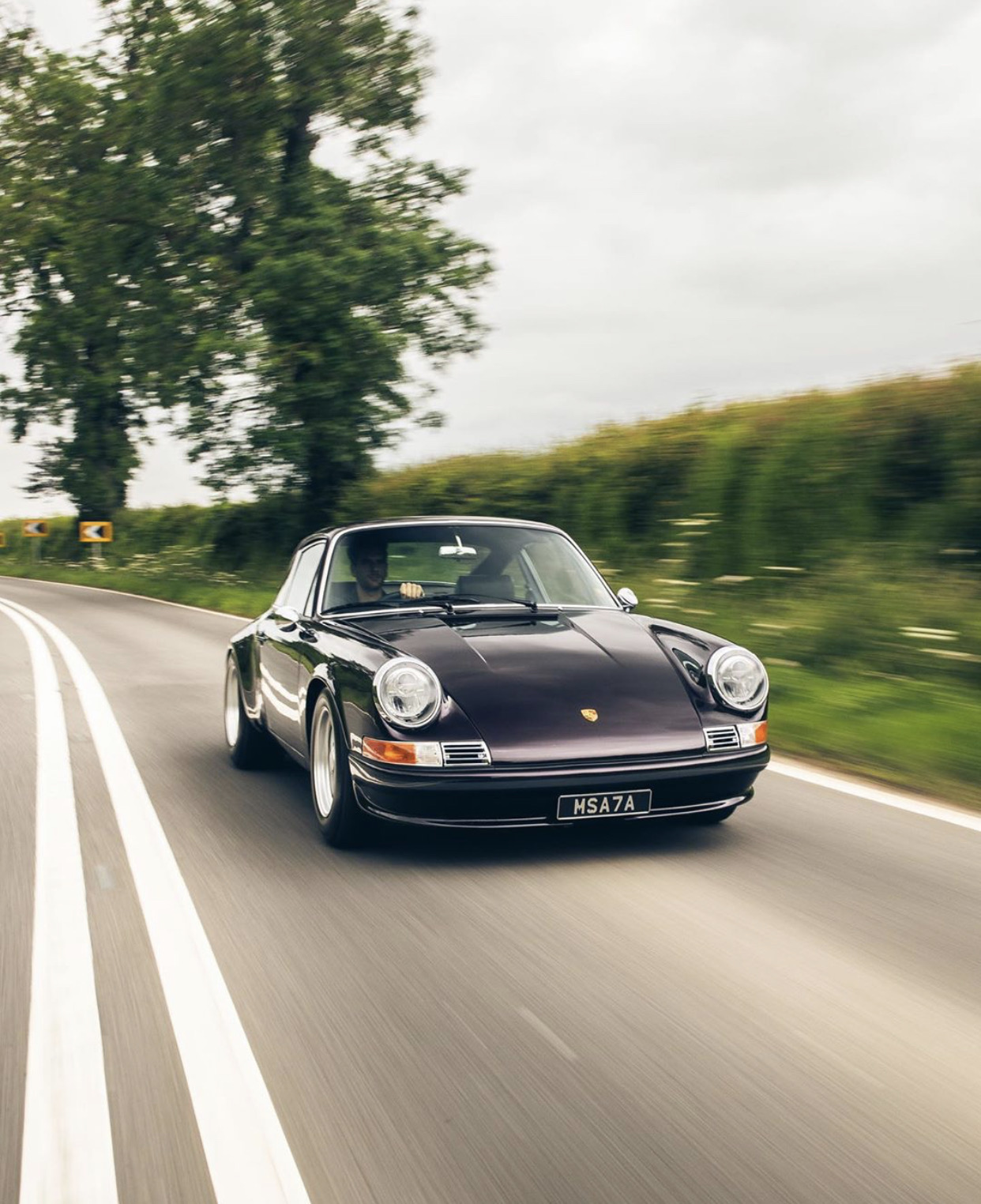
He found the car almost by accident—or at least, that’s how the story begins. Safa had been introduced to Porsche specialist Richard Tuthill, whose collection of classic 911s was housed in sprawling barns. On one of his first visits, Safa spotted a dusty, neglected 911 sitting among the cars. Tuthill turned the engine over. It started.
“That’s the one,” Safa remembers thinking.
What followed was a two-year restoration that was less about returning the Porsche to its original state than imagining what it might have become had Porsche itself continued evolving the 1972 model in the decades that followed.
The result is Lila: a deeply considered, highly personal interpretation of a classic 911 that retains the character of its past while quietly incorporating the conveniences of modern life.
Originally finished in aubergine, the car was reimagined in Porsche Amethyst, a shade that shifts dramatically depending on the light. In the sun, hints of its purple heritage emerge; at night, the paint can appear almost black. Inside, Safa paired Morello Cherry Alcantara with chocolate brown, a combination that initially raised a few eyebrows but ultimately became one of his favorite details.
“It was a journey and a half,” he says of the restoration.
And he means that literally. Safa was involved in everything from the overall design to the smallest tactile details. Original plastic switchgear was remade in metal and finished to look period-correct. The interior was rebuilt with a quilted finish, while even the custom tool kit was upholstered to match. A wireless phone charger was discreetly integrated into the dashboard, designed to disappear entirely when it isn’t being used. Even the key received its own custom treatment, complete with a small vial of the car’s paint.
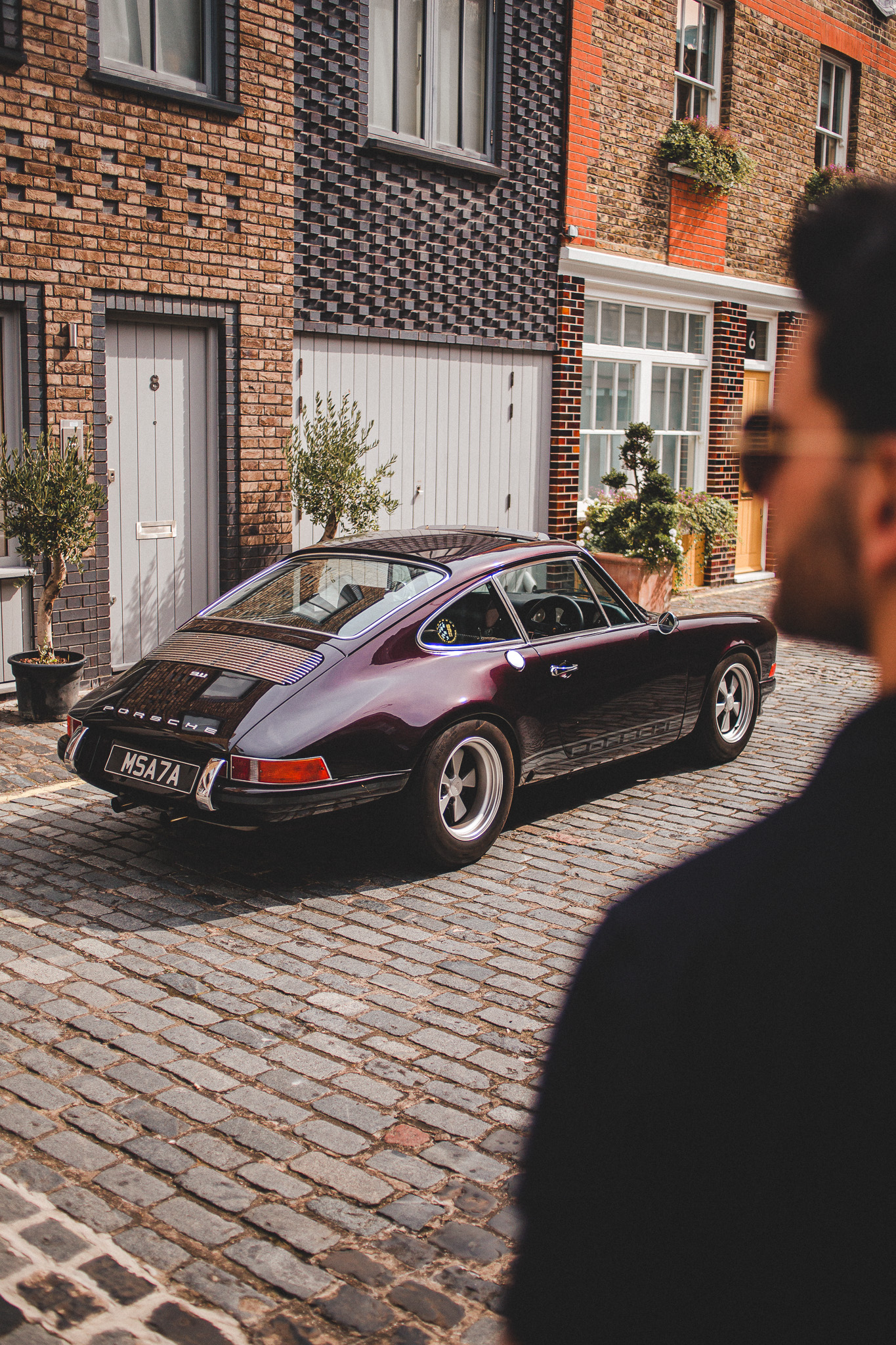
For Safa, these details matter because a car is experienced with more than just the eyes.
“There’s a lot when it comes to driving this around—the tactility of the car and the way something feels,” he explains. “And for me, that was really, really important.”
The same philosophy extends beneath the surface. The original 2.4-liter engine was retained after Safa experienced the car in its original form and immediately knew it was something special. The suspension and pedal box were upgraded, while other components were carefully reconsidered without compromising the spirit of the original car.
Even the exhaust was given a personality of its own. It produces a deep, muscular sound that Safa admits is beautiful around town—and considerably louder once the car passes 70 miles per hour.
But Lila’s significance has little to do with its specification sheet.
For Safa, driving has become a form of escape. His work demands a near-constant state of motion, and he describes himself as working six to six and a half days a week. The car offers something increasingly rare: uninterrupted time to think.
“I get my ‘shower moments’ when I’m driving,” he says. “When I’m in flow states, when there’s nothing but me in the car and I’m concentrating.”
In a modern world filled with driver assistance, notifications, and distractions, the 911 asks something different of its driver. There are no layers of technology separating Safa from the road. Instead, there is the engine, the steering wheel, the sound of the tires, and the road ahead.
For him, that creates something close to mental and spiritual freedom.
And some of his favorite roads are not particularly exotic. Early mornings through central London can still take his breath away, particularly when the streets are quiet and the city’s bridges and landmarks begin to emerge in the sunlight. Outside London, it’s the winding B-roads of Hertfordshire where Lila feels most at home.
“The car comes alive,” Safa says. “Those are the roads that this thing was built for.”
Perhaps the most meaningful chapter in Lila’s story came immediately after the restoration was complete. Rather than putting the freshly finished Porsche into storage, Safa collected it and immediately embarked on a 2,500-mile road trip across Europe with his closest friends.
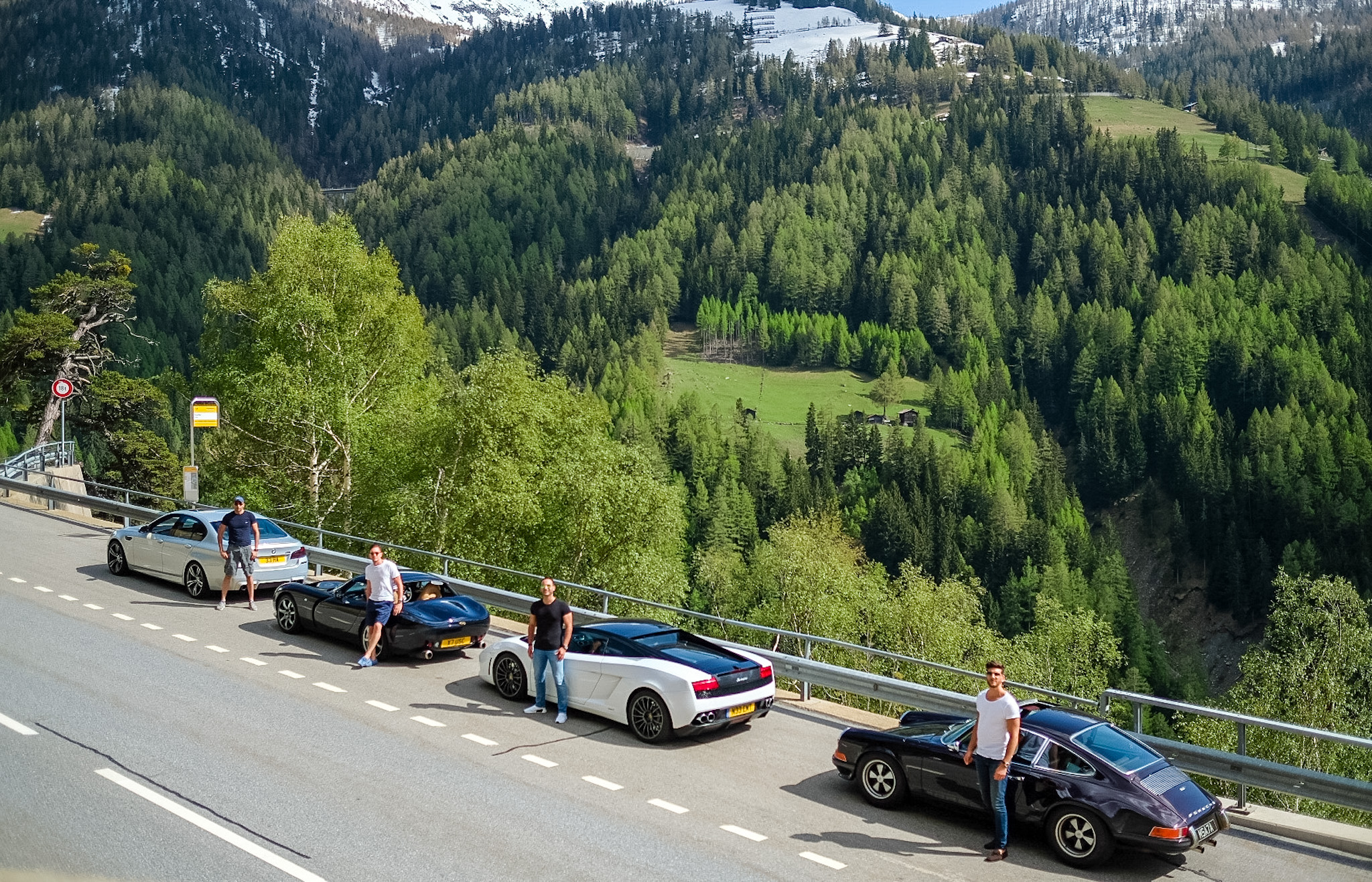
The group was a wonderfully mismatched collection of automotive personalities, ranging from Lamborghinis to a TVR Tuscan. Somewhere along the journey, driving through the Col de Turini, the sun broke across the landscape at precisely the right moment.
Safa remembers looking out at the road and realizing that the car he had spent two years imagining, designing, arguing over, and rebuilding was finally doing exactly what he had wanted it to do.
It was creating a memory.
That, ultimately, is what Lila represents to him. Not simply a dream car, but a catalyst for experiences—and a passport into a community that stretches far beyond the automotive world.
Safa calls cars “the great equalizer.” To a genuine enthusiast, he argues, a Porsche, a Bugatti, or an old Volkswagen Golf can all inspire the same excitement. The badge and price tag become secondary to the shared language of cars.
Through Lila, he has met some of his closest friends, traveled across countries, discovered roads he might never have otherwise driven, and collected the kind of memories that cannot be bought from a showroom.
His passion for cars has also become inseparable from his professional life. At Poppins, Safa and his team work across creative, marketing, digital technology, and physical spaces, with a particularly deep connection to the automotive industry. The company has worked with major automotive brands and numerous restomod companies, and Safa describes the agency’s London headquarters as something of a Willy Wonka factory for car enthusiasts.
Yet his own automotive tastes have changed over time.
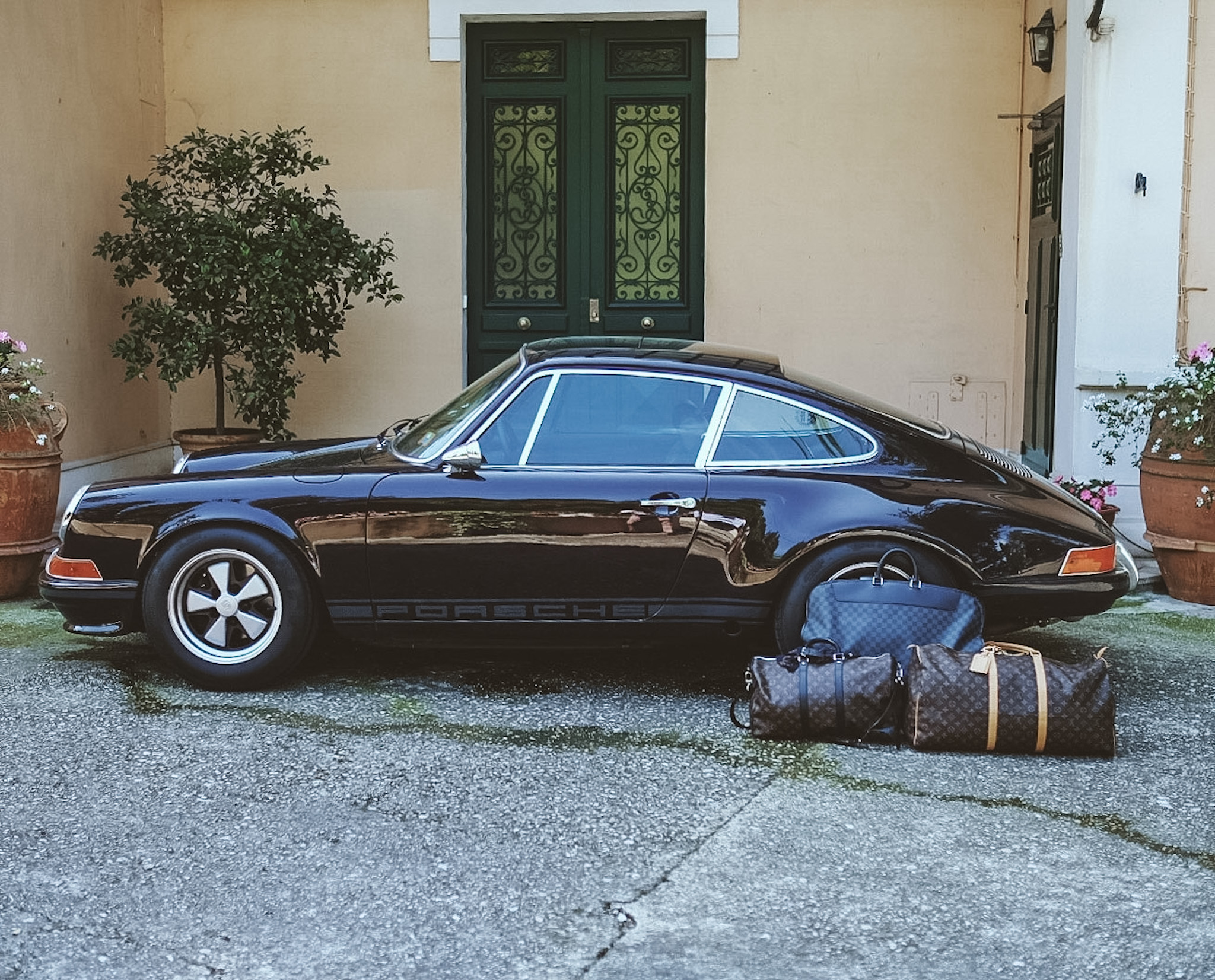
The bright, fast supercars that once represented the ultimate fantasy have gradually given way to cars with more history and personality: 1970s classics, ’90s icons, and early-2000s models. New cars can still excite him, but increasingly, it is the stories behind older ones that hold his attention.
Maybe, he jokes, that means he’s getting older.
If it does, he seems more than happy with where the road has taken him.
Now in his 40s, Safa says he feels more energized, focused, and hungry than ever. For someone whose career is built around imagining what comes next, he sees this chapter not as a destination, but as another starting point.
And Lila, fittingly, is there for the journey.