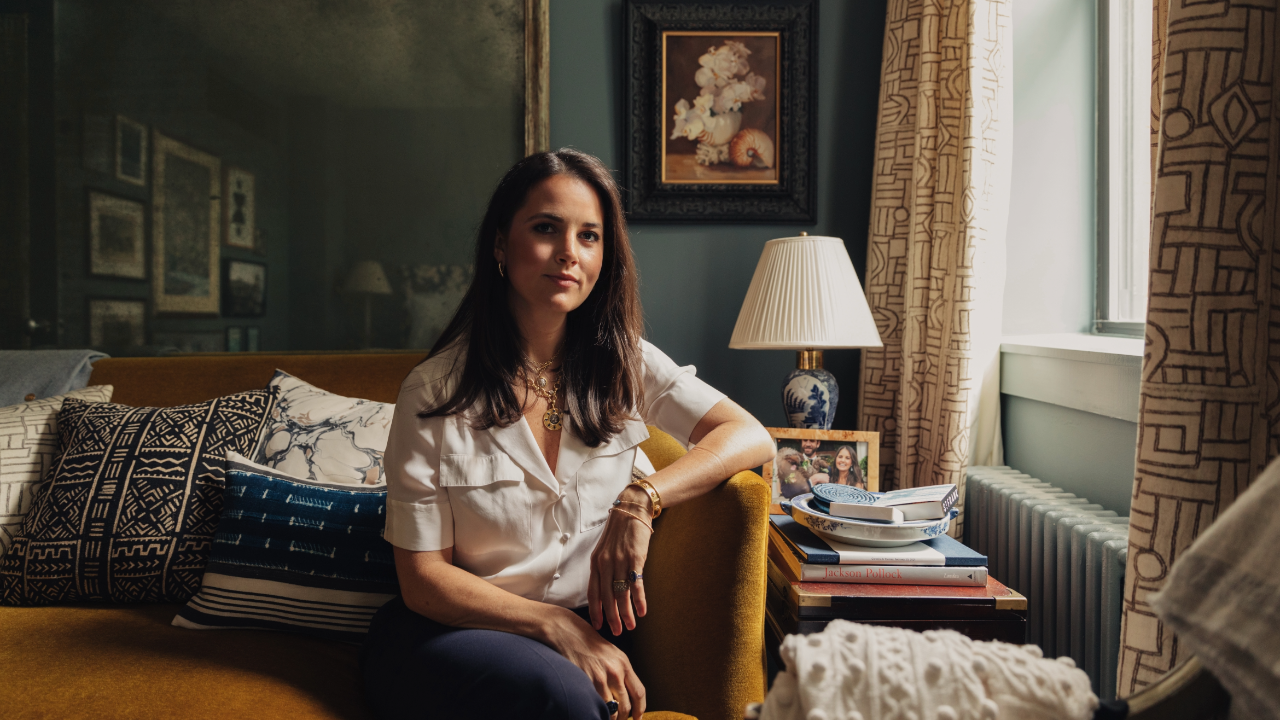



Amy Shore is one of the UK’s most respected automotive photographers. But the most important car in her life isn’t a rare Ferrari or a pristine Aston Martin — it’s a battered, sign-written Land Rover Defender named after a land speed record holder. This is her story.
There’s a moment in every great love story where you know it’s serious. For Amy Shore, that moment came somewhere on a country lane, wrestling with a clutch so heavy she felt like she was driving a bus.
“The first time I got behind the wheel of Mildred, she wasn’t actually owned by me,” Amy recalls. “I drove her and I thought, my goodness, that clutch is so heavy. I just thought, God, I feel like I’m driving a bus.”
That first drive — a test run up and down the lanes near her home — was hardly love at first sight. But as anyone who’s ever owned a Defender knows, they have a way of getting under your skin. Two years later, Mildred was hers.
“It was funny getting back behind the wheel of her in my own ownership and thinking, well, you and I are going to have to get on now. We’re together.”
A Car With a Name — and a History
Mildred didn’t arrive by design. “She kind of came to me,” Amy says. “I inherited this very scrappy Land Rover, and I didn’t really understand Land Rovers at the time.”
The name, though, was chosen with care. Amy named her after Mildred Bruce — the Honourable Mrs. Victor Bruce, a land speed record holder and, by Amy’s account, a remarkable woman. It’s a habit Amy has carried across her garage.
“I always tried to name my vehicles after inspirational women that I find inspirational.”
It’s a small detail, but it says something about how Amy relates to her cars — not as machines, but as presences. Characters. And over the years, Mildred has become exactly that.
“If Mildred could talk, some of the stories that she would tell. God, I have laughed in this car. I have sobbed in this car. I have moved house with this car multiple times. The reason why I’m married to Will is because of this car.”
She pauses, then adds: “It’s one of those cars I think we can no longer get rid of. Because it’s just — it’s part of the family. Mildred is part of the family.”
Tattooed, Battle-Scarred, and Utterly Hers
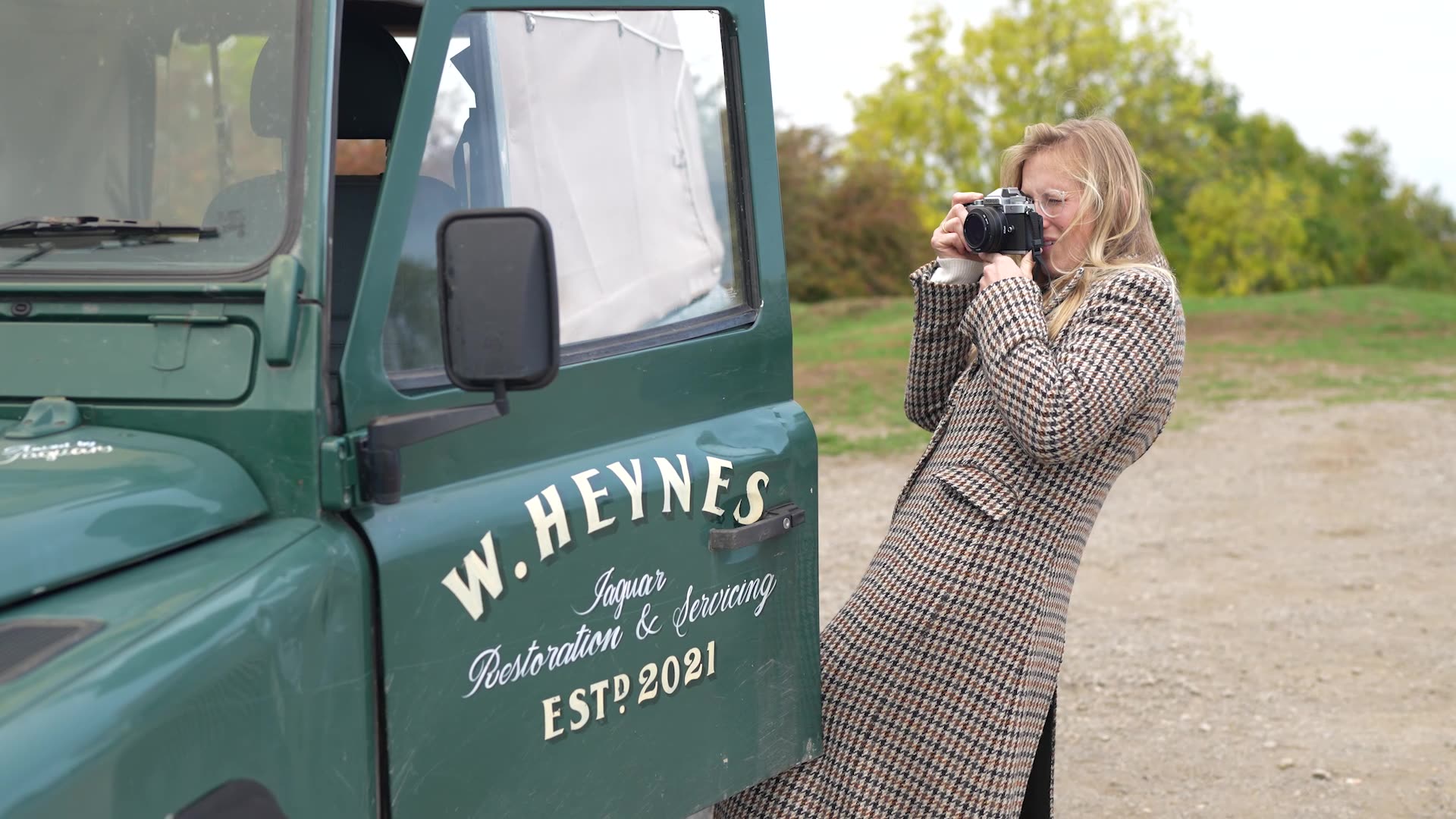
Pull up alongside Mildred and you’ll notice she’s not quite like other Defenders. She’s been sign-written — completely, lovingly, deliberately — with details that tell the story of Amy’s life and work.
“We decided to completely tattoo Mildred,” Amy explains, pointing out the car’s name written on the front and the branding for her classic Jaguar restoration workshop along the side — the business she runs with her husband, William Haines. A friend, Signs by George, did the work by hand.
“There’s no going back from this. That’s a full paint job. If I was brave enough to have a tattoo, I’d be covered, but instead I’m tattooing my cars.”
One of her favourite details is a tiny word hidden on a dented panel. “Because she is battered and always has been, I’ve put a little tiny ‘oops’ in here.” It’s the kind of touch that only means something to someone who’s lived with a car, not just owned one.
Even more personal is the door, where racing-style driver names were added at the time of sign-writing — Amy Shaw and William Haines. Then they got married. “We’ve crossed out Shaw and my actual name is Amy Haines.” A small edit, permanently rendered in paint, that captures a whole chapter of a life.
How a Wedding Photographer Became an Automotive Legend
Amy’s path into car photography wasn’t planned — it was a collision of circumstances, all happening within six weeks.
“Photography came first in my life. At the age of 16, I’d already started getting into photography because I’ve been a very creative person from a very young child.”
It was her father who first handed her a camera. “He was the one that said, you know, Amy, won’t you have a go at taking photographs? Because I think you’ll quite enjoy it. And he taught me how to look at light mainly.”
For years, photography and driving were separate passions. Then, fresh out of university at 22, friends of her father asked her to photograph a replica Ferrari P4 they’d built. Around the same time, she shot a wedding. “Those three things in the space of six weeks kickstarted my career, and from then my automotive career absolutely snowballed.”
But here’s the thing: when she arrived in the world of classic cars, she knew almost nothing about them.
“I didn’t understand modern cars, they didn’t particularly excite me, and supercars didn’t particularly excite me. But then I was getting all these classic Ferraris, Aston Martin shoots. And I was like, oh my God, this is the most beautiful thing I’ve ever seen. But I didn’t know what I was looking at.”
That outsider’s eye turned out to be her greatest asset. “I would look at these cars as objects that had light flowing over them, and they were the things that I would think about photographing weddings and people, my friends. That’s all I’d shot. Up until that point, that all kind of came to me and I thought, okay, well, I’ll photograph cars how I see people.”
Twelve years on, she describes it simply: “It’s the best job in the world that I could ever possibly have dreamed to do.”
The Meditation of Driving
Ask Amy about her favourite roads, and she’ll tell you about Scotland. The North Coast 500 — a 500-mile loop around the far north of Scotland — was the setting for her first solo road trip, taken at 24 in a classic Mini with a roof rack loaded with fuel cans and photography kit.
“Just driving in this landscape which is so big and raw and unforgiving and being in this little white car — that was it. Because of that trip, I still go back to that stretch of Scotland regularly, in fact at least once a year.”
These days, with two businesses and a new baby, driving has become something rarer and more precious: time that belongs entirely to her.
“Driving has become an absolute — I suppose — a meditation to me, especially motor biking. A lot more than driving. But even driving, you know, I get into Mildred. I put my headphones in because it’s so loud on the motorway, you’ll have hearing damage. And I listen to music and it becomes my time.”
“When you’re driving and you can do nothing else other than concentrate on the road, listen to some music and just enjoy the vehicle that you were in — I find it really special. That’s a really special time for me.”
Her favourite time to drive? Late at night, on familiar roads.
“You’ve just got your headlights and some music going and — is there something really comforting about being inside a little car that, you know, is your little safe space and nobody else is on the roads? I feel like I’m a lot more connected to the road, to the car.”
Life in the Roadworks
At the end of our time together, Amy is asked the question every Roadworthy guest faces: if your life right now were a road, which one would it be?
She doesn’t hesitate.
“It would probably be central Birmingham. When you’ve got all the roadworks and you have no idea which way you’re meant to be going, where the cones are going, and you’re kind of making your way through it and you’re thinking, okay, I’ve managed it.”
It’s a characteristically honest answer from someone who describes a life in flux — new motherhood, a growing business, a house bought at auction with 21 working days to move in, currently “falling down at bits.” But there’s no anxiety in how she says it.
“There’s a lot of change at the moment. I think it’s one of those — you just kind of have to absolutely roll with it and just, you know, it’ll work out okay in the end.”
And through all of it, there’s Mildred. Battered, sign-written, heavy on the clutch, and absolutely going nowhere.
Roadworthy is about extraordinary people and the cars they drive. Each episode takes viewers on the road with a brilliant driver — whether commuting, cruising country highways, or heading out for a favourite meal. Behind the wheel, they open up about the roads that shaped them, the vehicles that became part of their identity, and the stories that prove every great drive is worth telling.